
The Weaving Futures Together Indigenous Peoples' Knowledge Fair
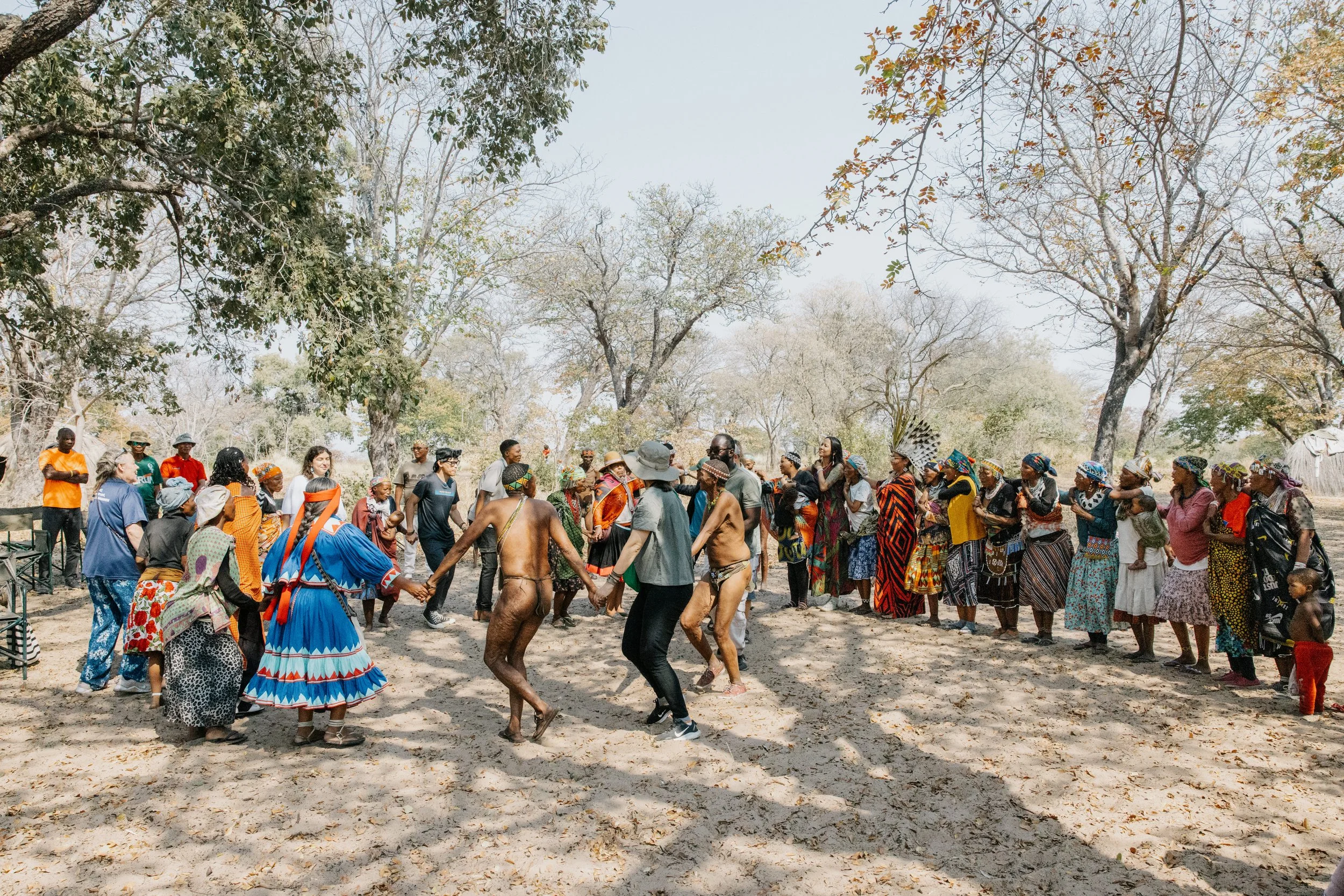
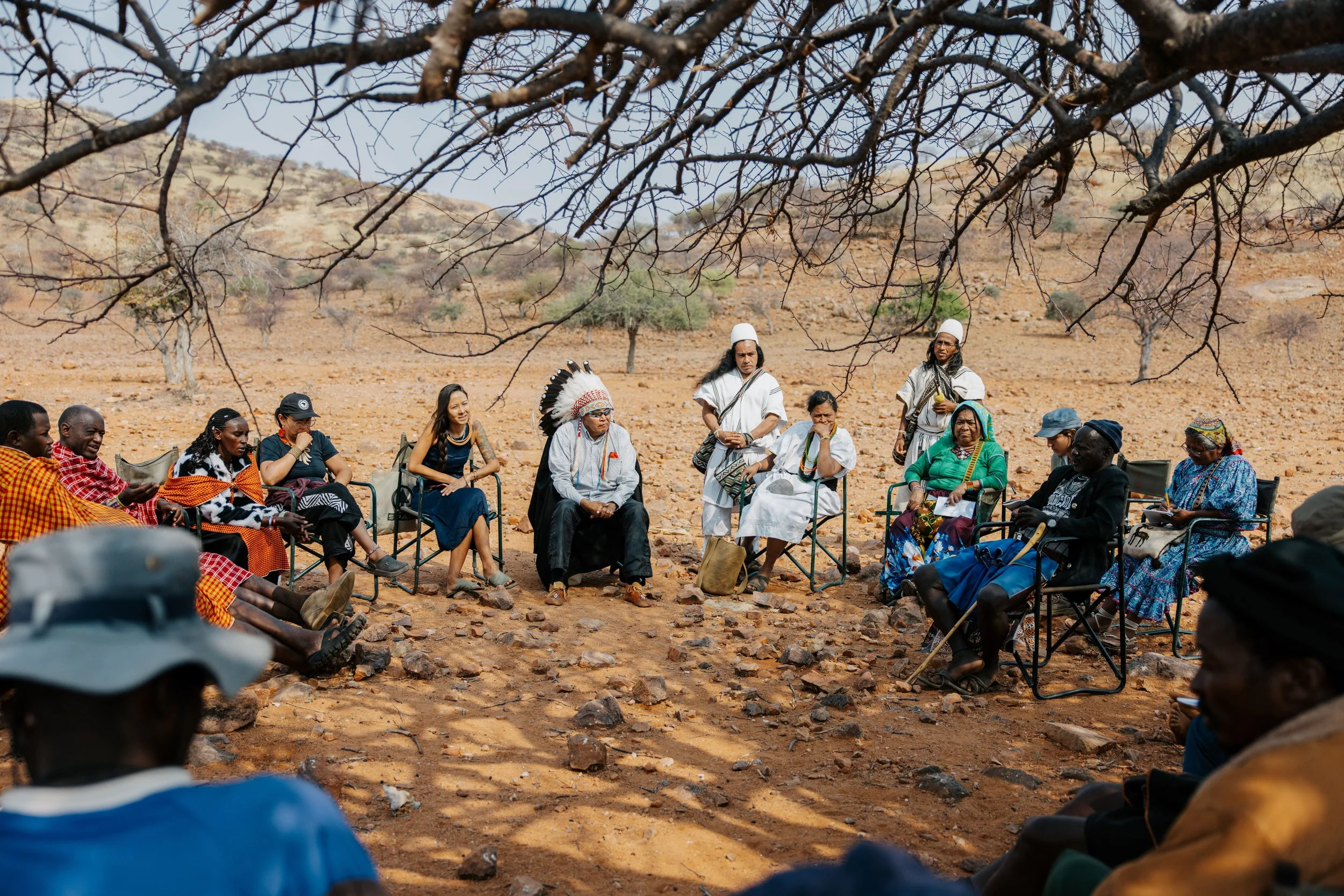
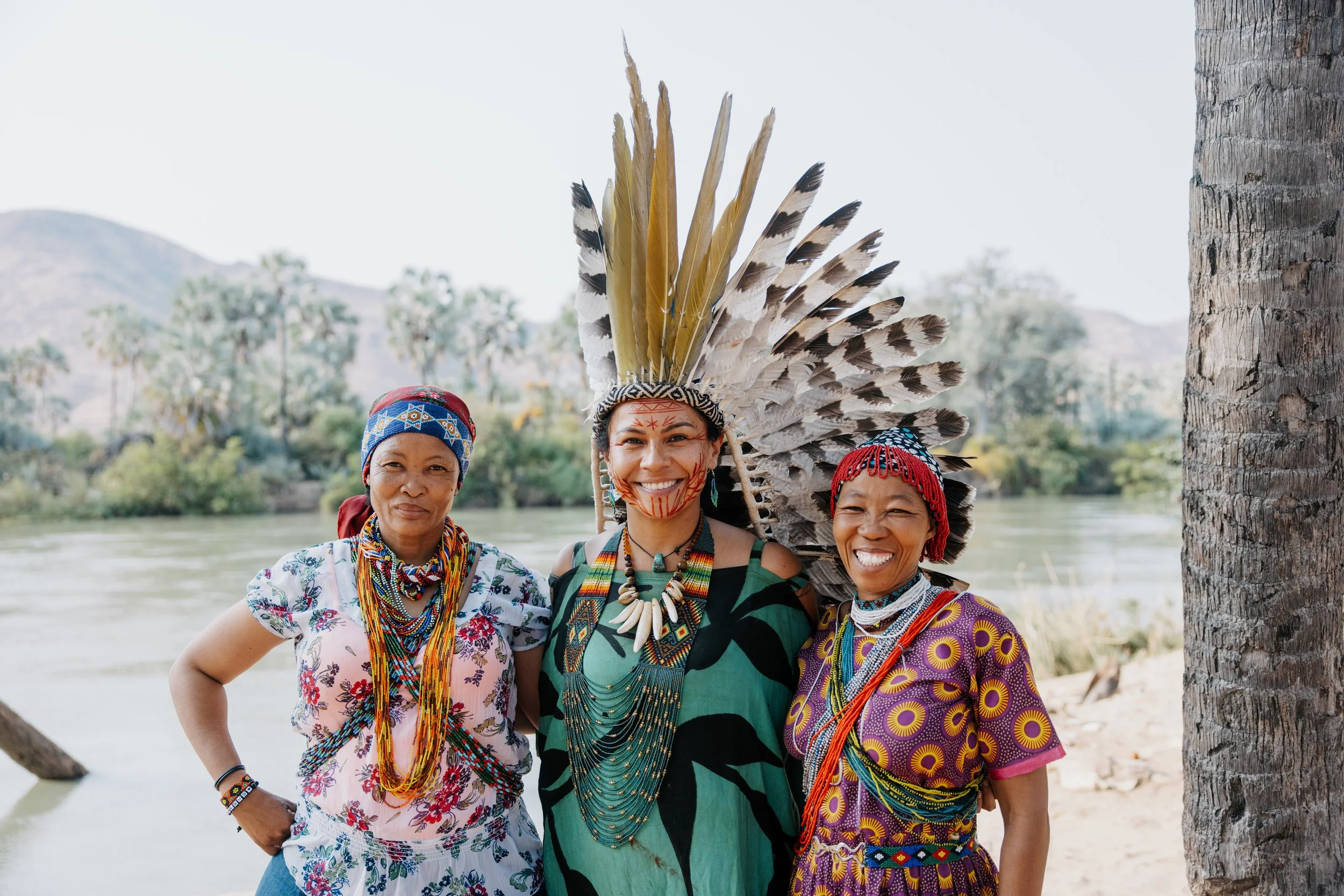
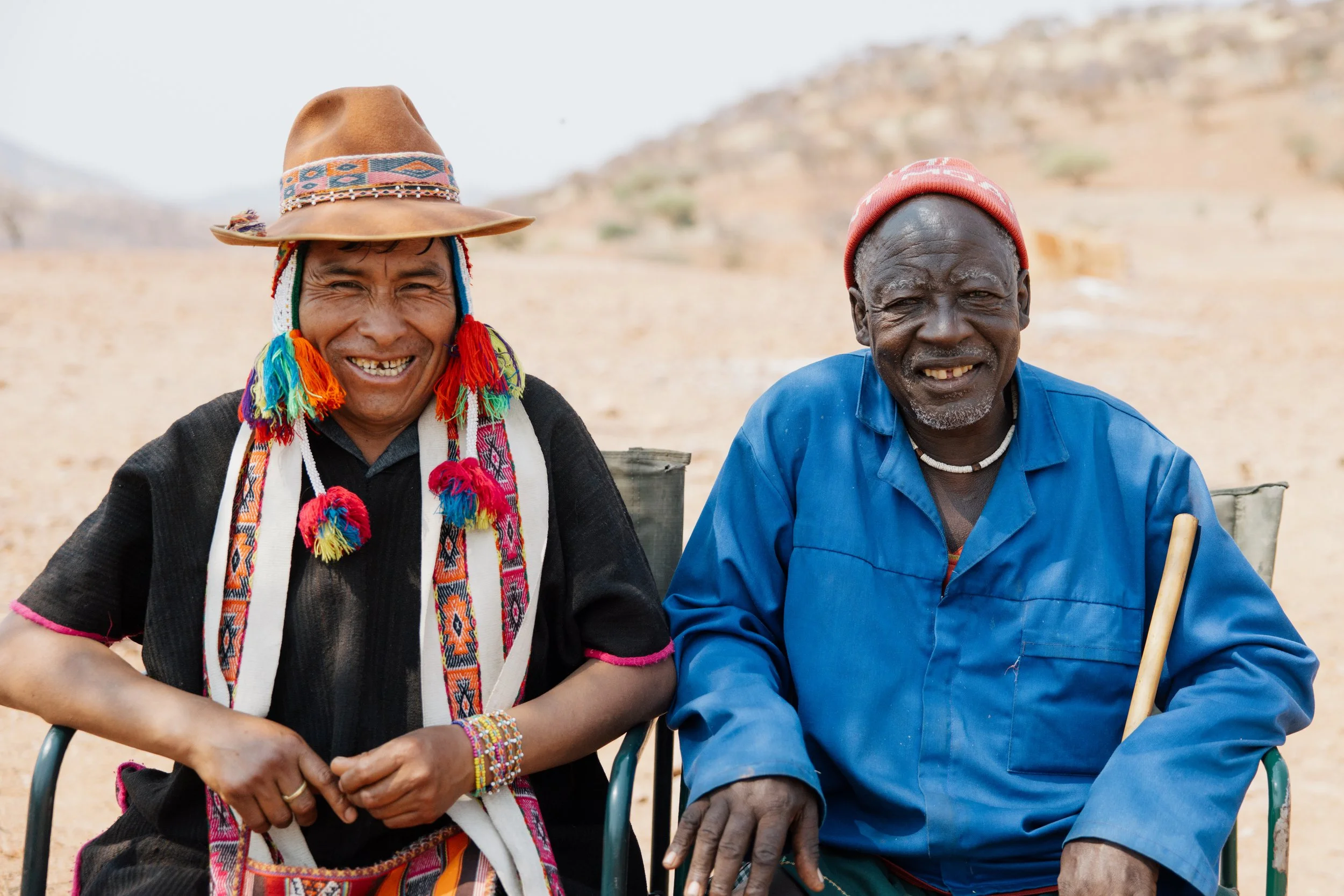
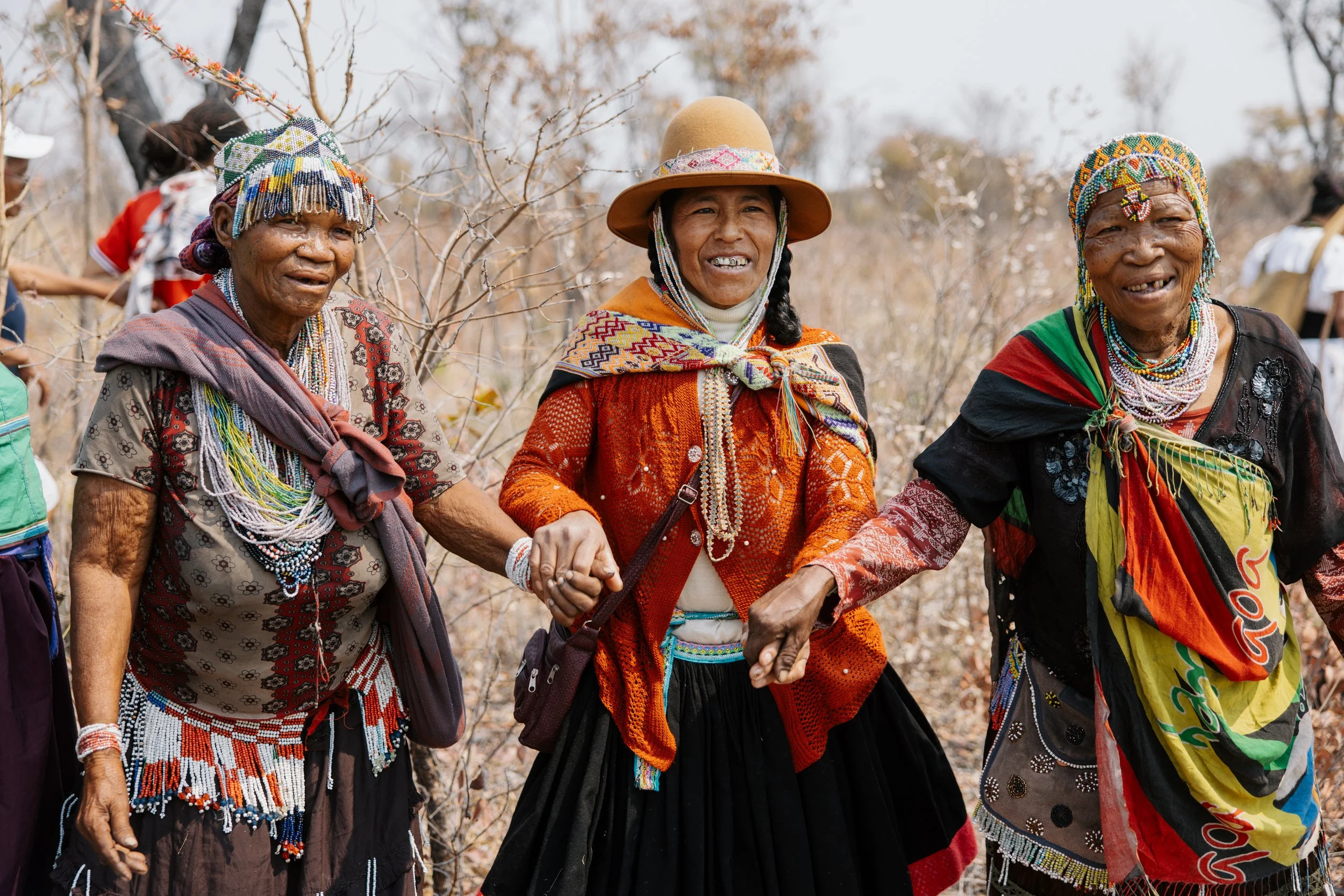
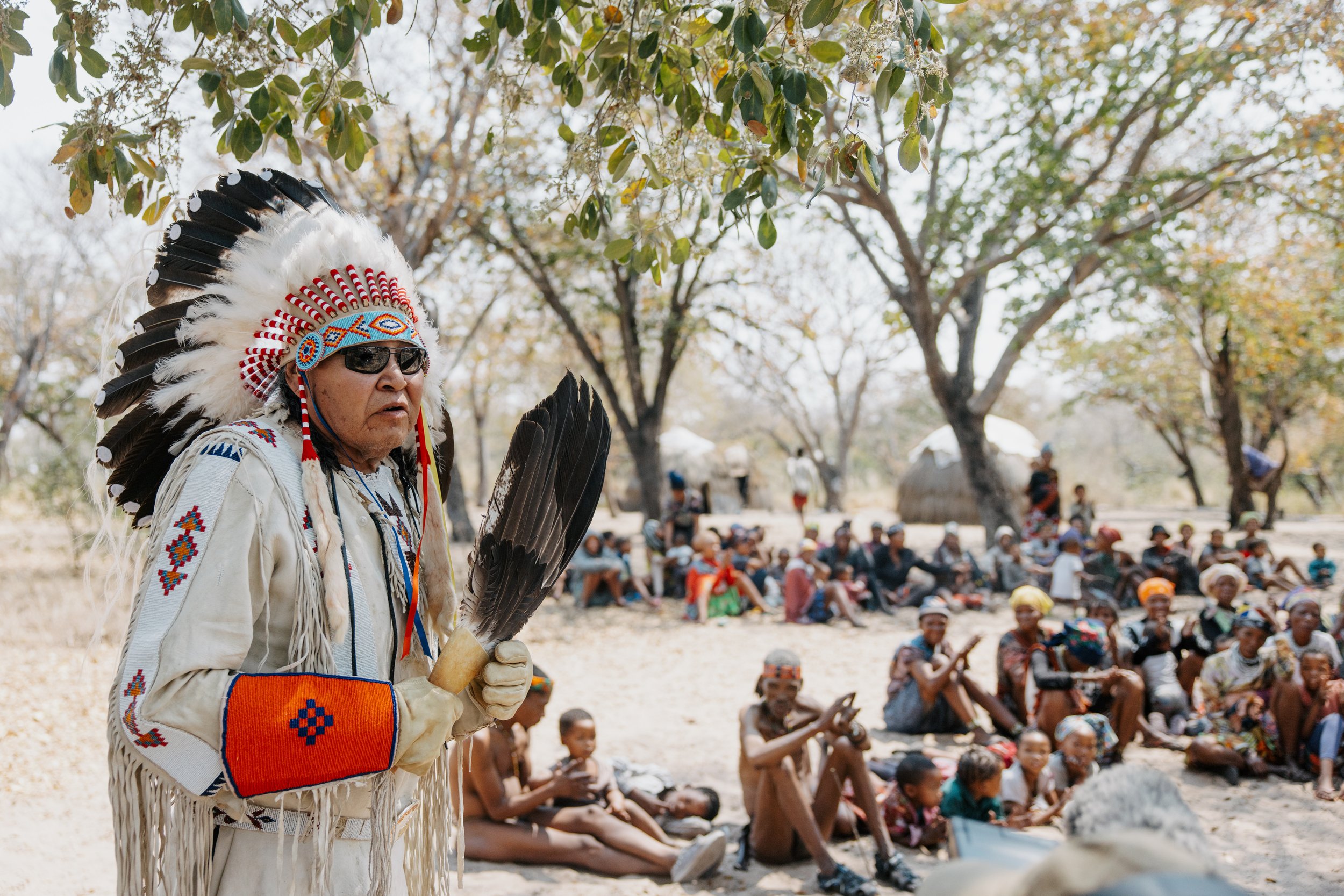
For 14 days in September 2025, 42 Indigenous delegates from 12 countries travelled together through Namibia. They came from four continents and from communities as different as the Ju/'hoansi San of the Kalahari, the Q'ero of the Peruvian highlands, the Penan of the Malaysian rainforest, and the Piikani Nation of the Canadian plains. They gathered not in a conference hall but in the land itself — in the territories of the Ju/'hoansi San of Nhoma and the OvaHimba of Epupa.
What they found was something many had not expected: that their struggles were not isolated. That strategies which had worked in one territory could often be adapted in another. And that the sense of solidarity built across those 14 days was something that could not have been created in any other way.
Namibia, September 2025
Weaving Futures
2025 Gathering in Namibia
Weaving Futures Indigenous Knowledge Fair, Namibia 2025
The Gathering in Numbers
42
INDIGENOUS DELEGATES
17
INDIGENOUS NATIONS
12
COUNTRIES REPRESENTED
4
CONTINENTS REPRESENTED
6
THEMATIC TALKING CIRCLES
14
DAYS
1
COLLECTIVE MANIFESTO
3
COMMUNITY LETTERS PRESENTED TO NAMIBIAN GOVERNMENT
Host Communities
The Ju/’hoansi San of Nhoma
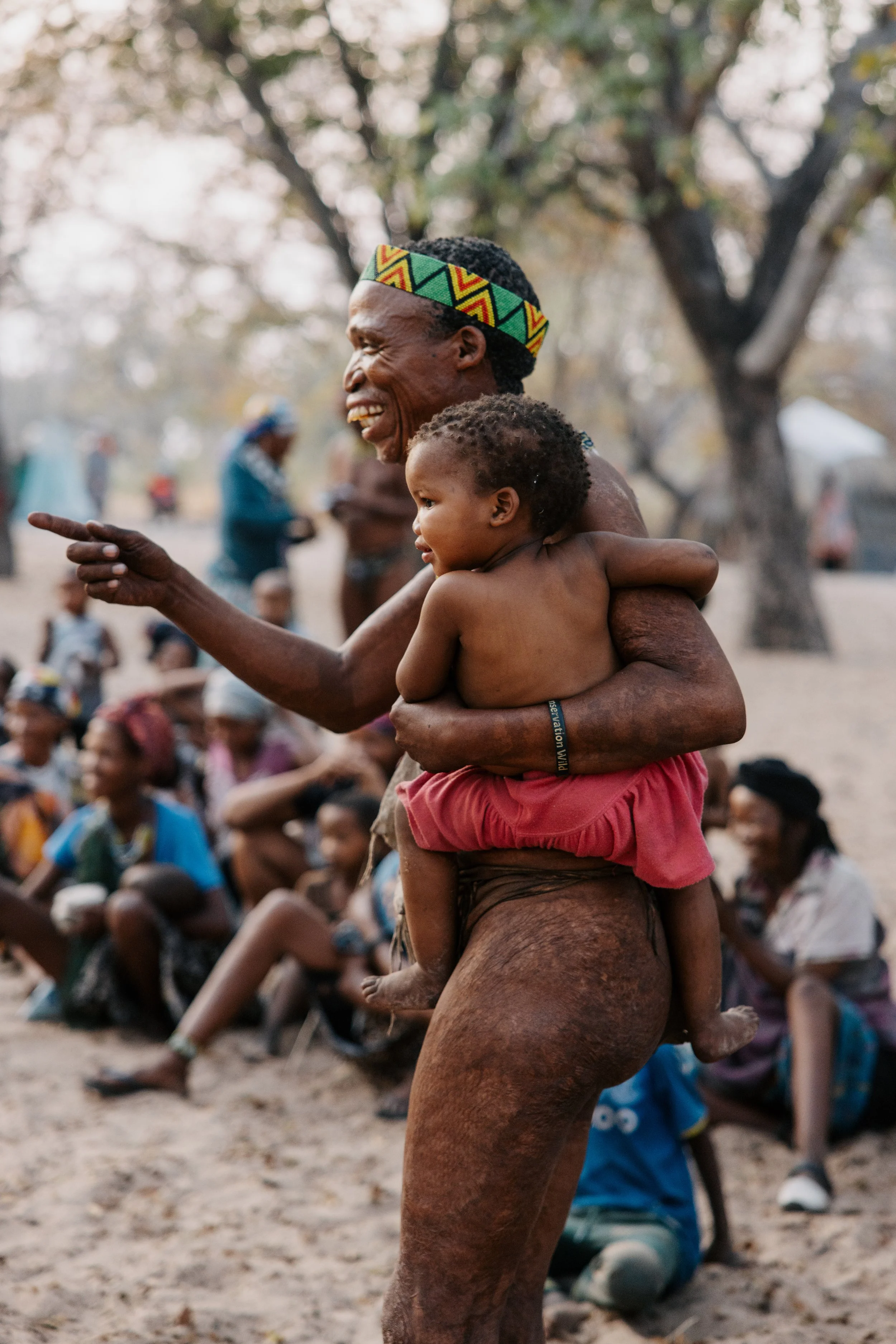
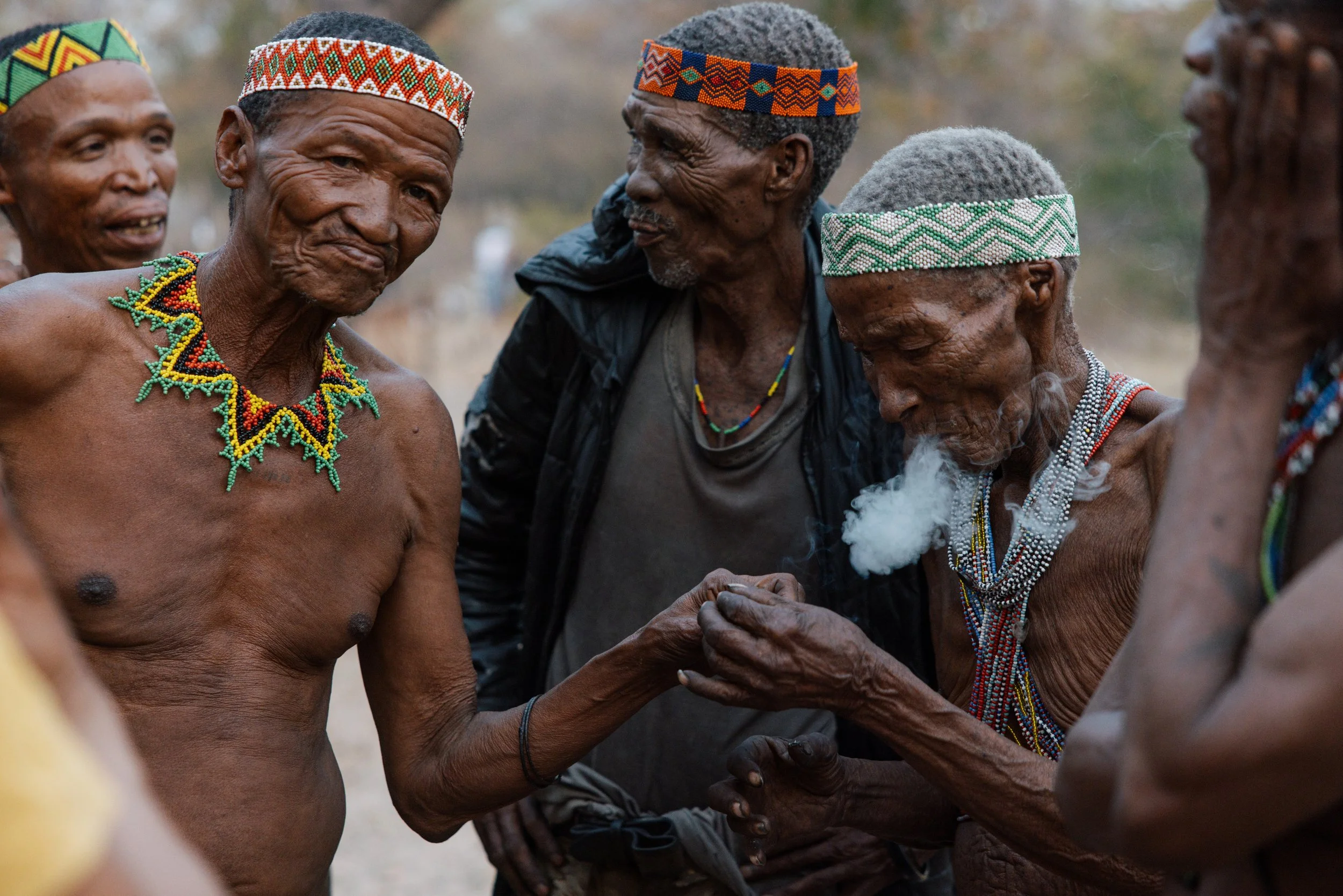
The Ju/’hoansi San of Nhoma, in the Nyae Nyae region of north-eastern Namibia, are one of the last communities in southern Africa to have maintained the full practice of hunter-gatherer life — tracking, gathering, ceremony, and a relationship with the land that stretches back, unbroken, for millennia. Their ancestral knowledge is not archived. It is lived.
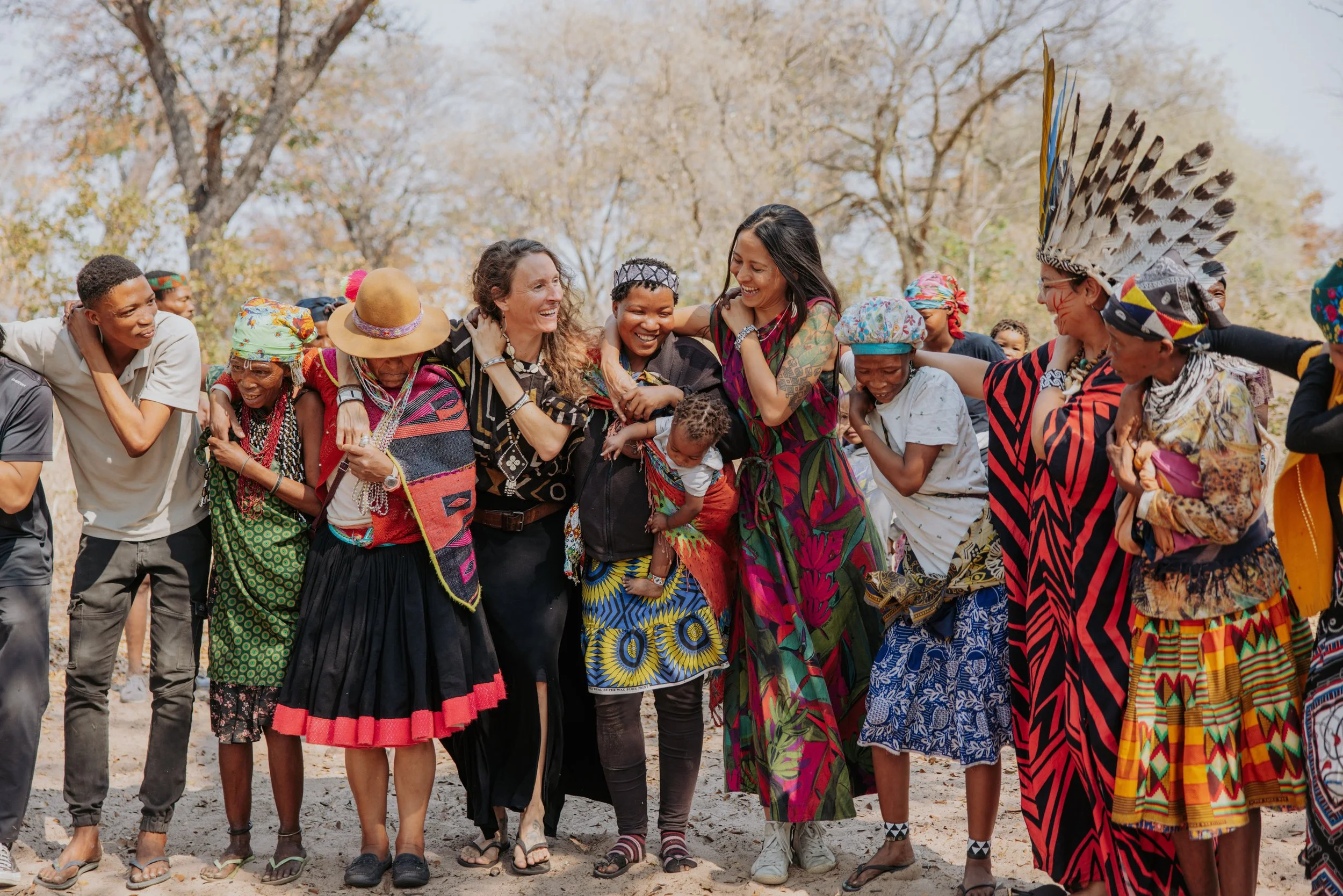
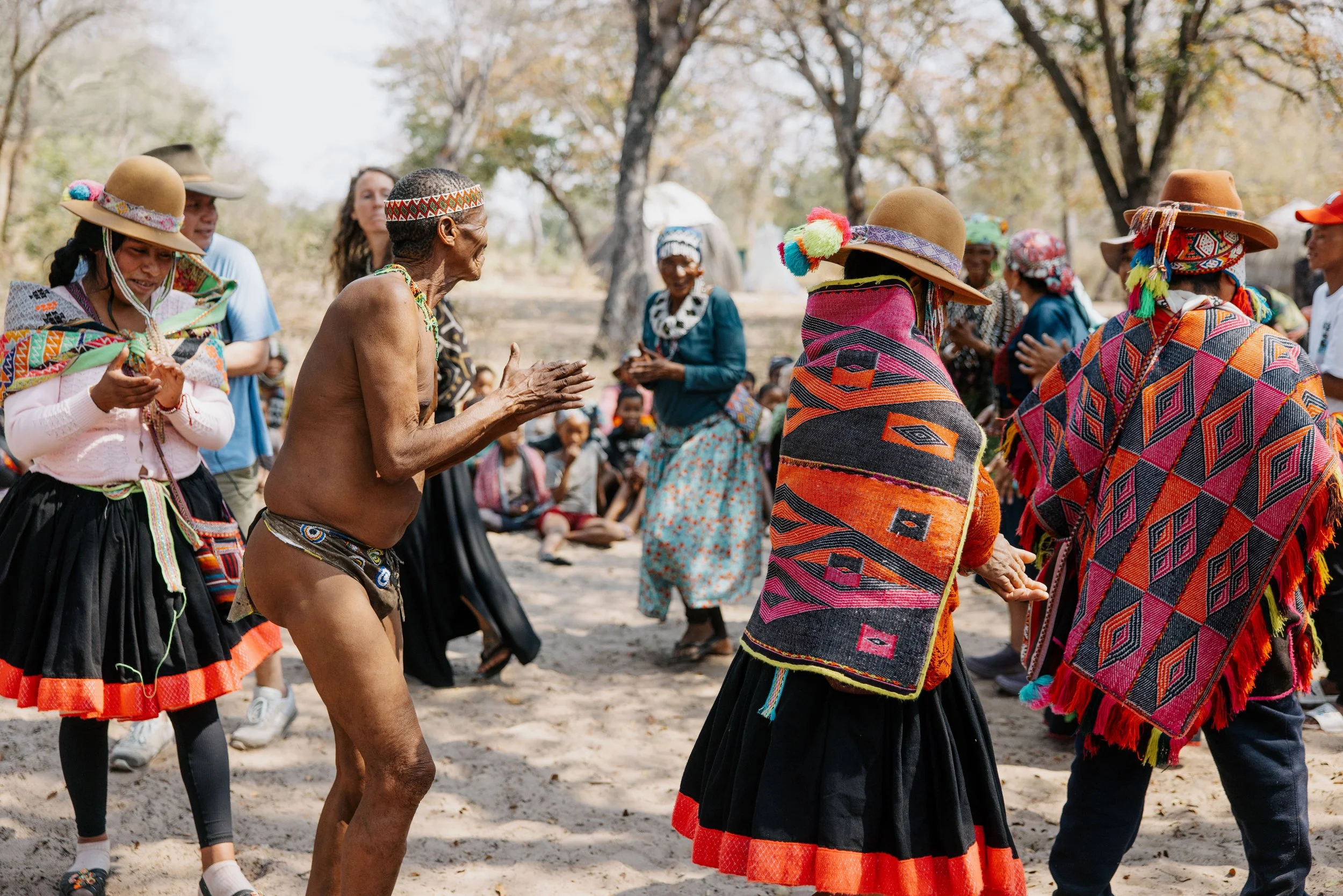
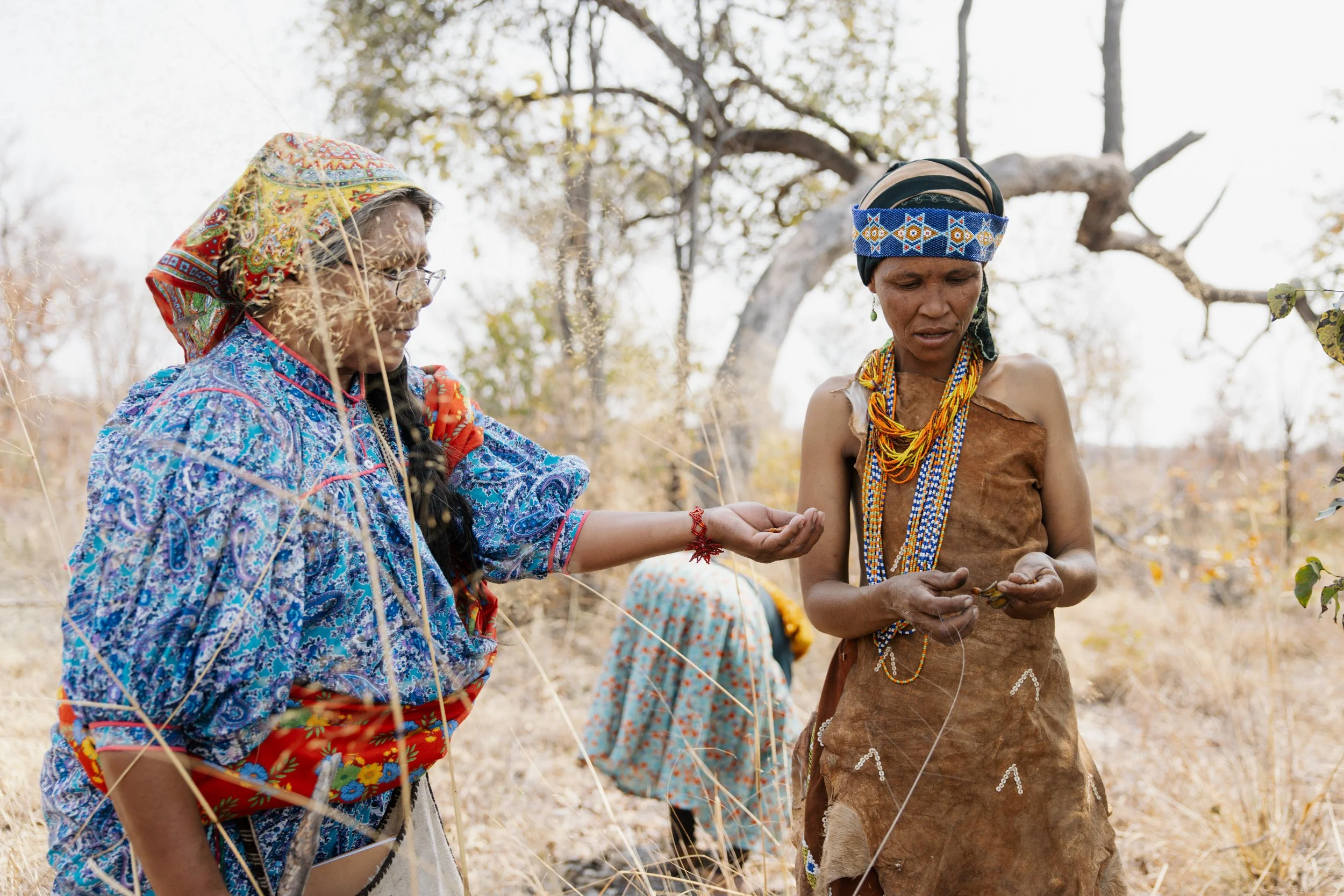
Hosting the 2025 gathering was an act of cultural affirmation. Participants from across the world came together and joining tracking and medicinal plant walks, and the trance dance healing ceremony. In the talking circles, the community spoke directly about their situation: sitting between two conservancies and belonging to neither, with hunting rights restricted and no formal agreement protecting their share of tourism revenue. They were heard by the international delegates who recognised the same dynamics in their own territories, and offered the solidarity and strategies they had used to push back.
Chairman Kaatjiua Tjitaura, Epupa Conservancy
“It was emotionally powerful to share knowledge with people from different parts of the world. We also learned many traditional teachings — from the importance of fire, wood, and soil, to the importance of communicating with and respecting our ancestors, who many believe protect and guide us.”
The OvaHimba of Okapare, Epupa
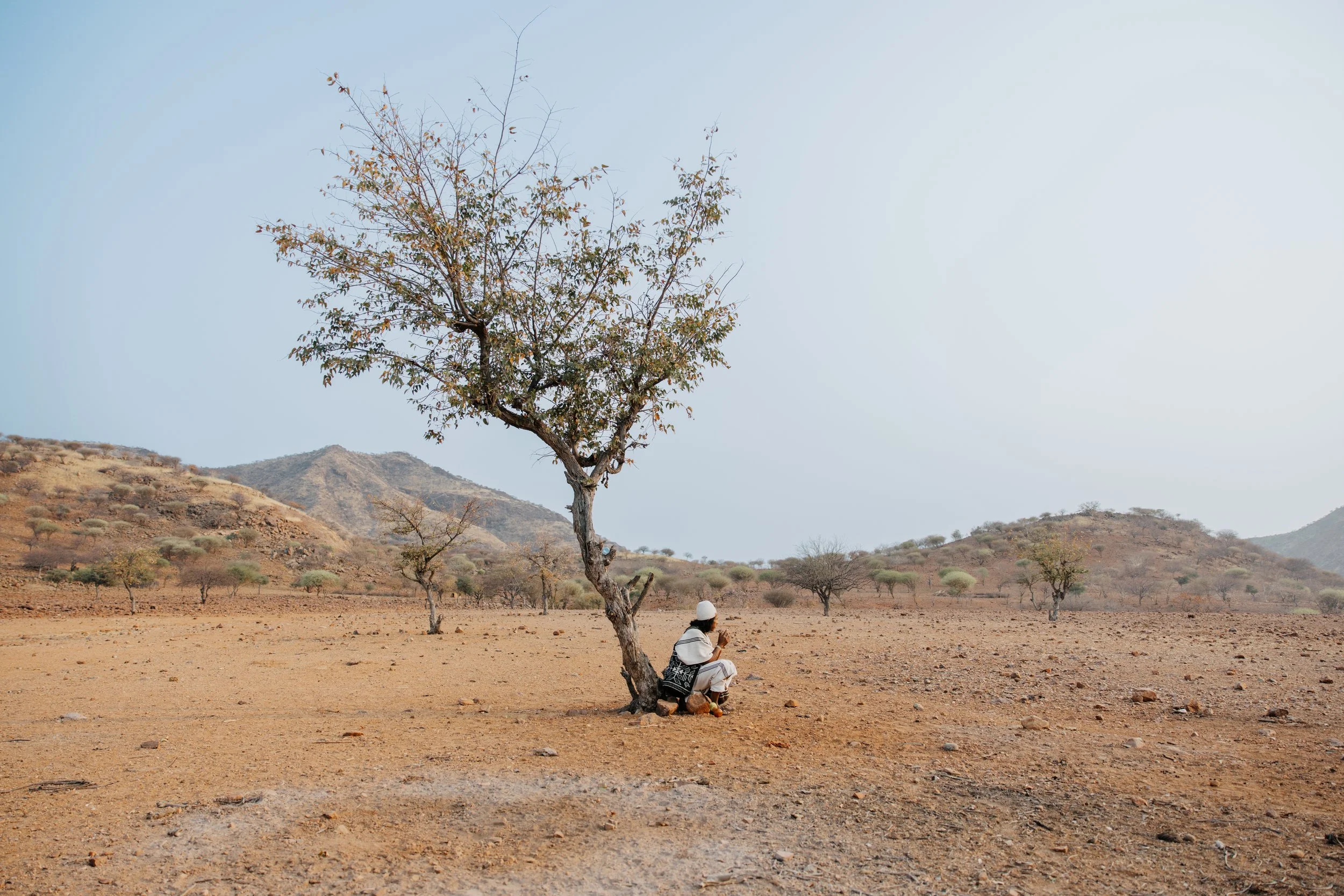
The OvaHimba of the Epupa conservancy in the Kunene Region are semi-nomadic pastoralists whose territory is one of the most remote and visually striking in Namibia: red ochre, desert rock, the Epupa Falls. Their knowledge of medicinal plants, sacred landscapes, and ancestral healing is deep and living. The holy fire, the ancestral consultation, the layered relationship between the spiritual and the physical: these are not traditions preserved in memory. They are how the community moves through the world today.
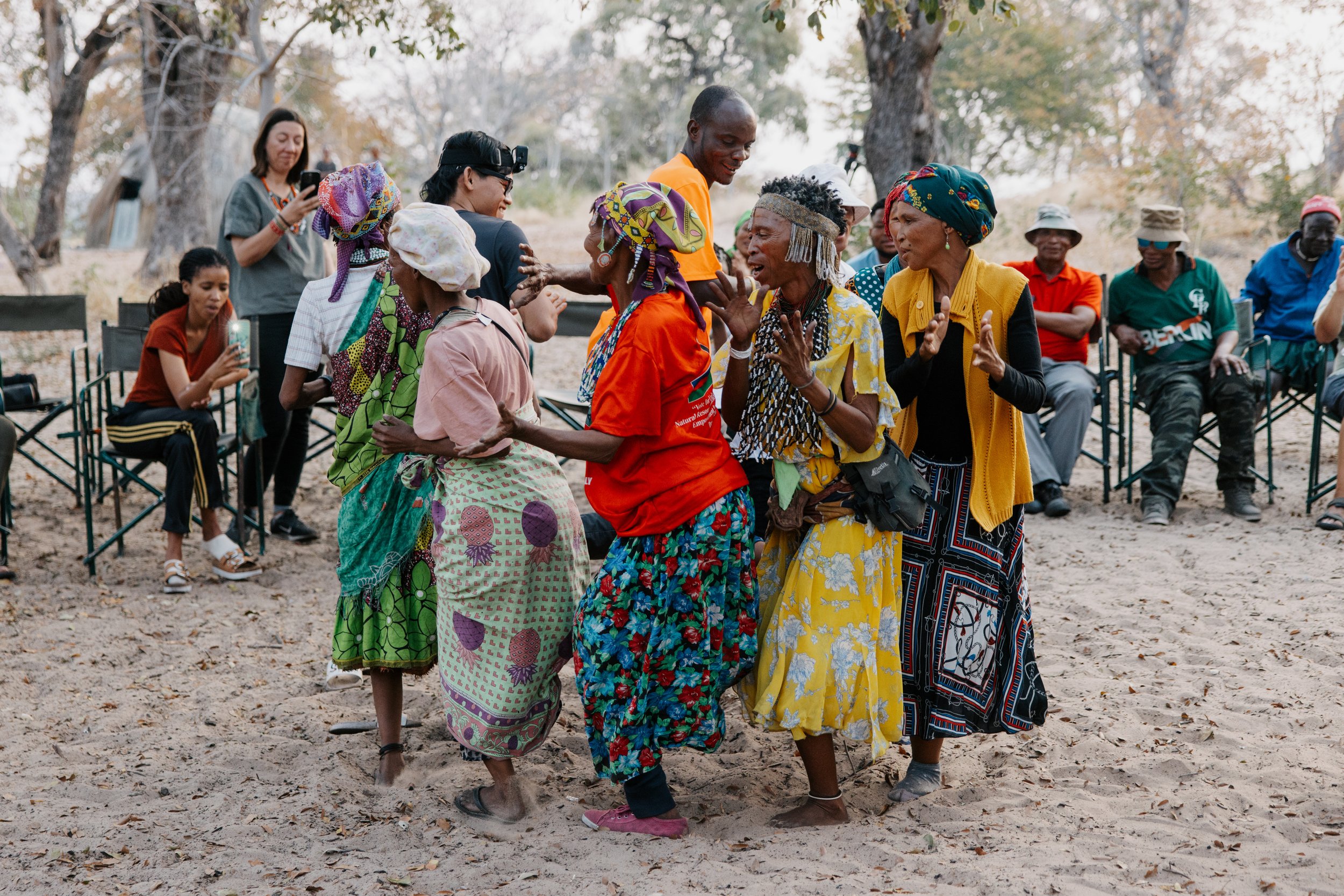
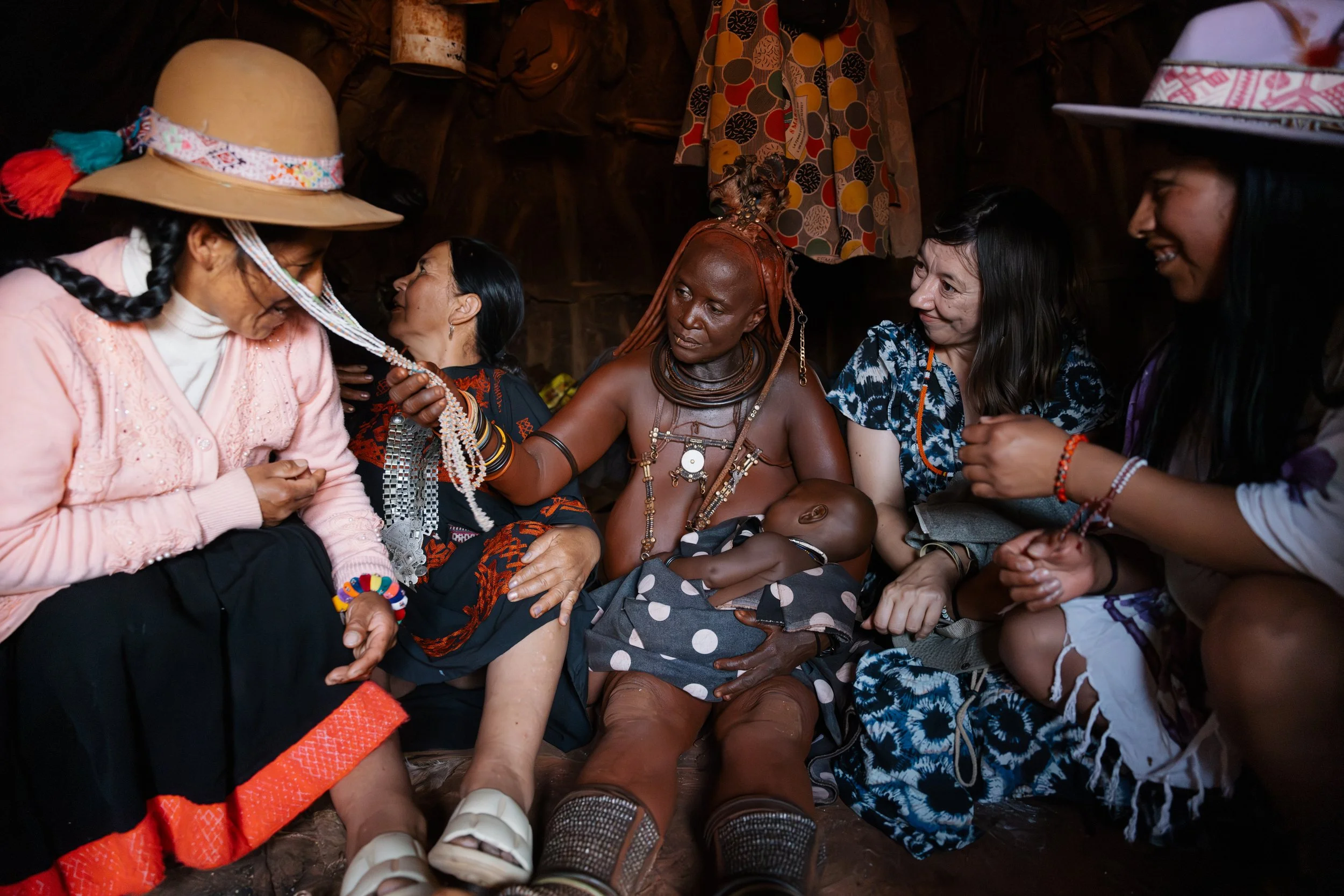
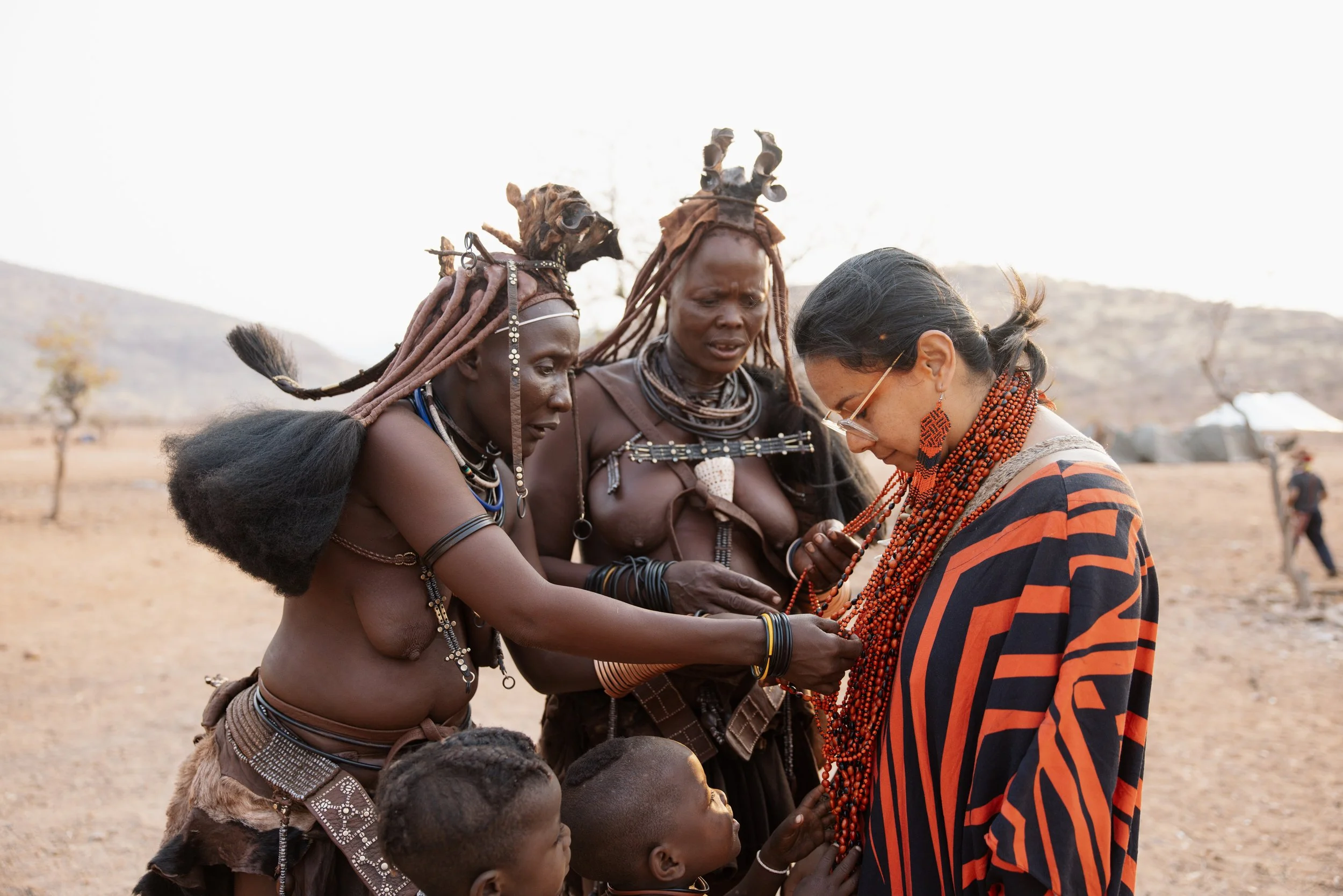
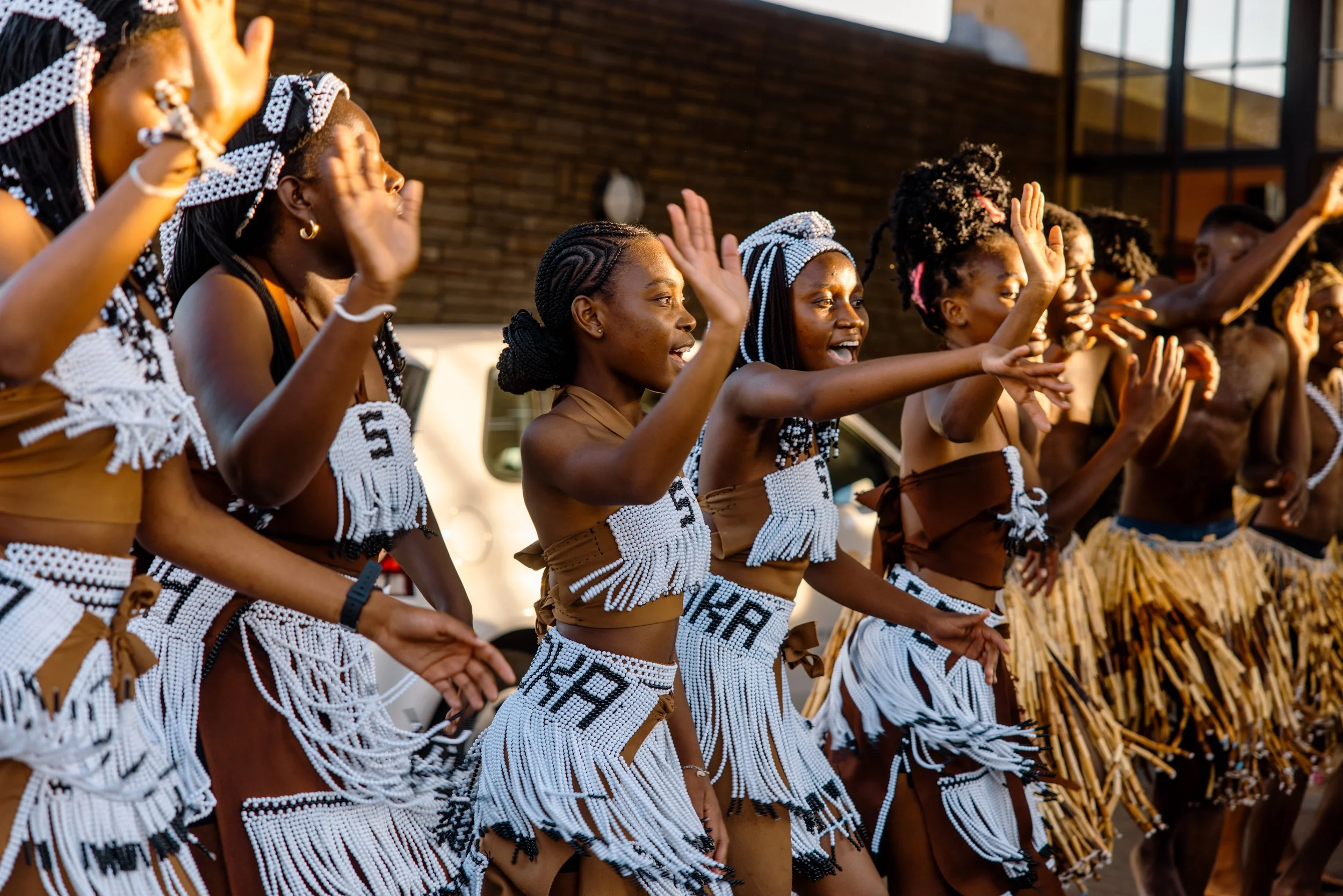
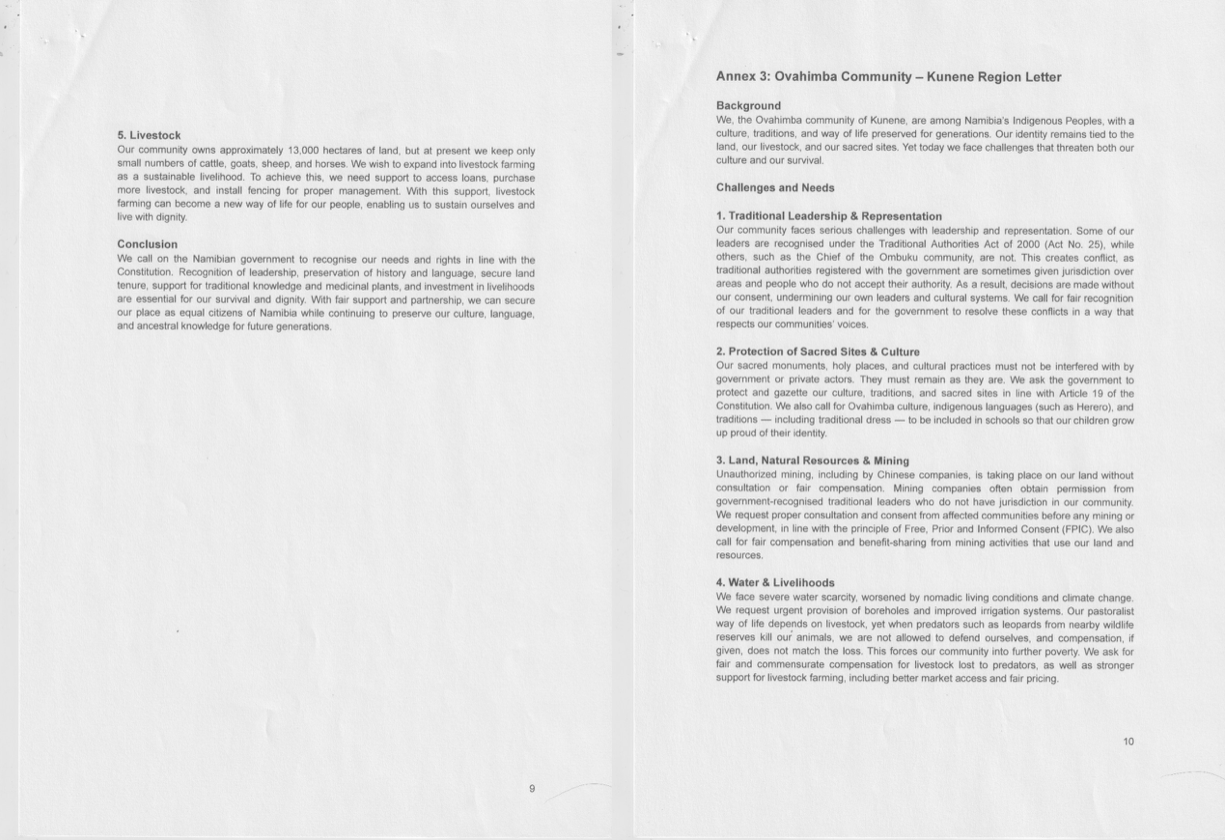
At Okapare, the community hosted participants with extraordinary generosity, sharing ethnobotanical knowledge, the practice of goat intestine reading, homestead visits, and an evening of circular dance. The Talking Circles brought their challenges into global dialogue: mining pressures, human-wildlife conflict, water scarcity, and the need for fair benefit-sharing from the cultural tourism their territory draws. Delegates from Kenya, Chile, Colombia and beyond recognised the same dynamics, and shared the strategies and legal tools they had used to address them.
Leon Tsamkgao, Nyae Nyae Conservancy
“This gathering inspired us to stand together as one global Indigenous family, to support one another, share knowledge, and continue protecting our cultures, lands and traditional ways of life.”
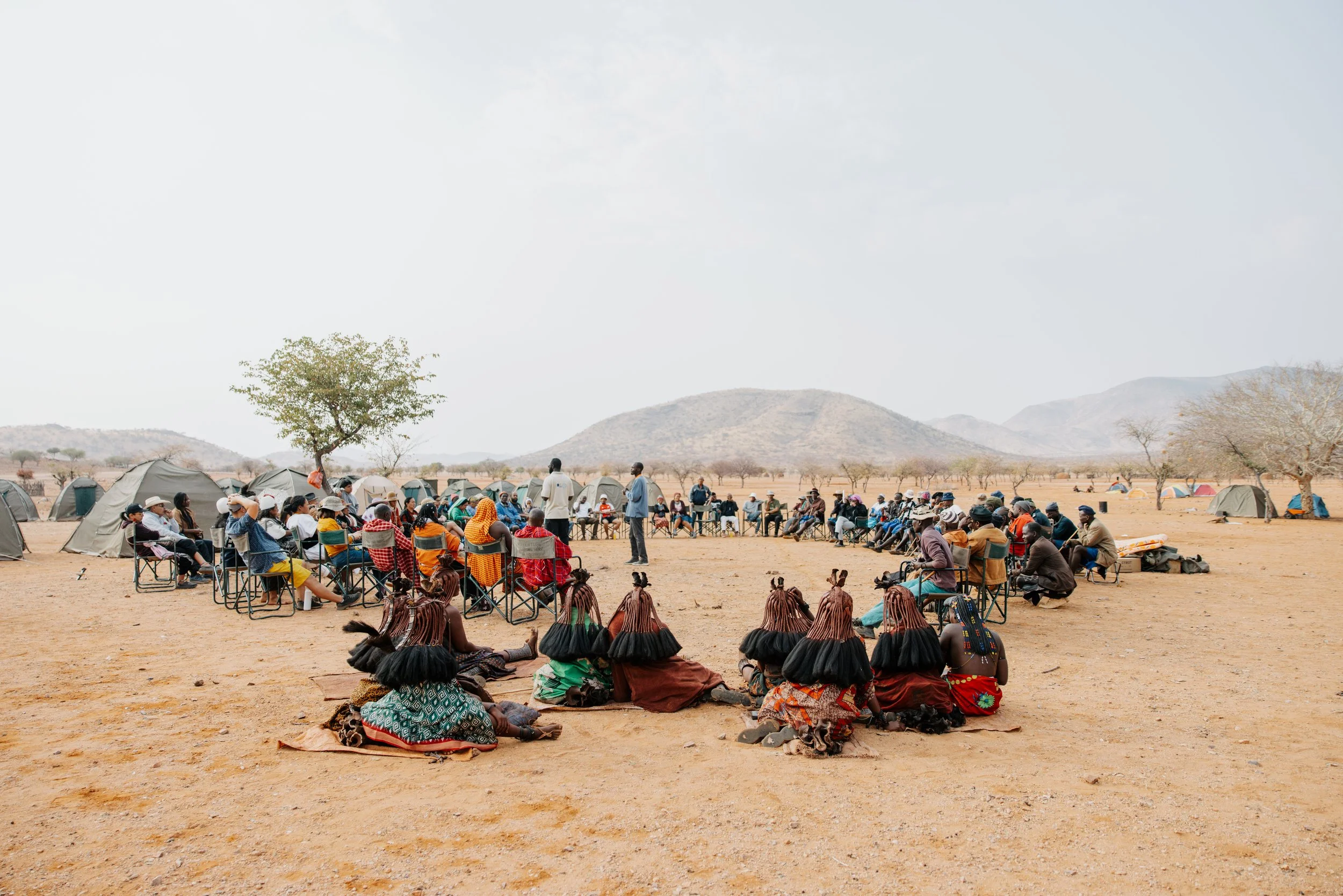
What Happened
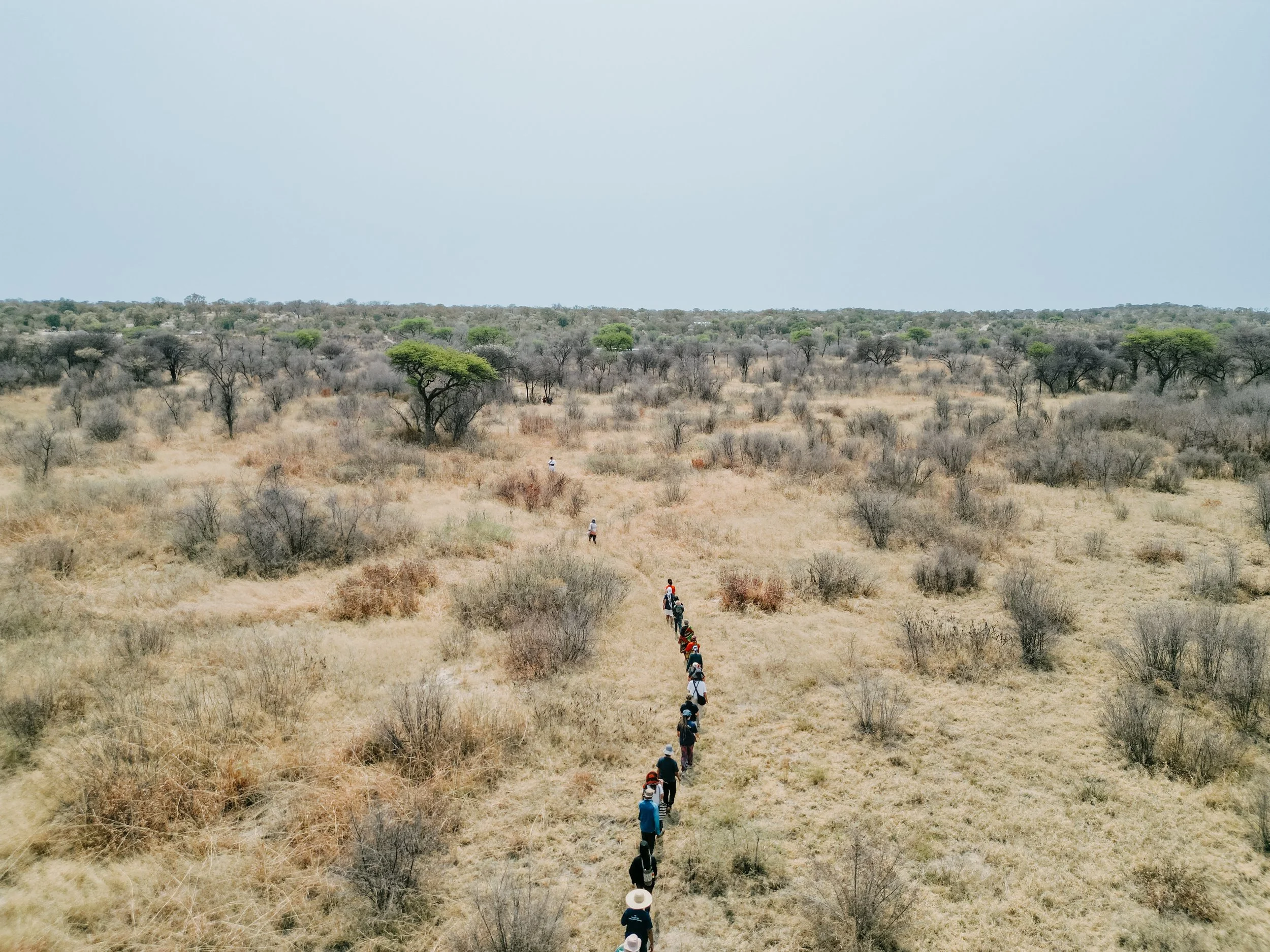
The Knowledge Fair was designed as a moving, land-based gathering. Participants travelled together from Windhoek to Nhoma, from Nhoma to Okapare in the Epupa conservancy, from Okapare to Khorixas, and finally back to Windhoek for the closing Ecology Custodianship Day.
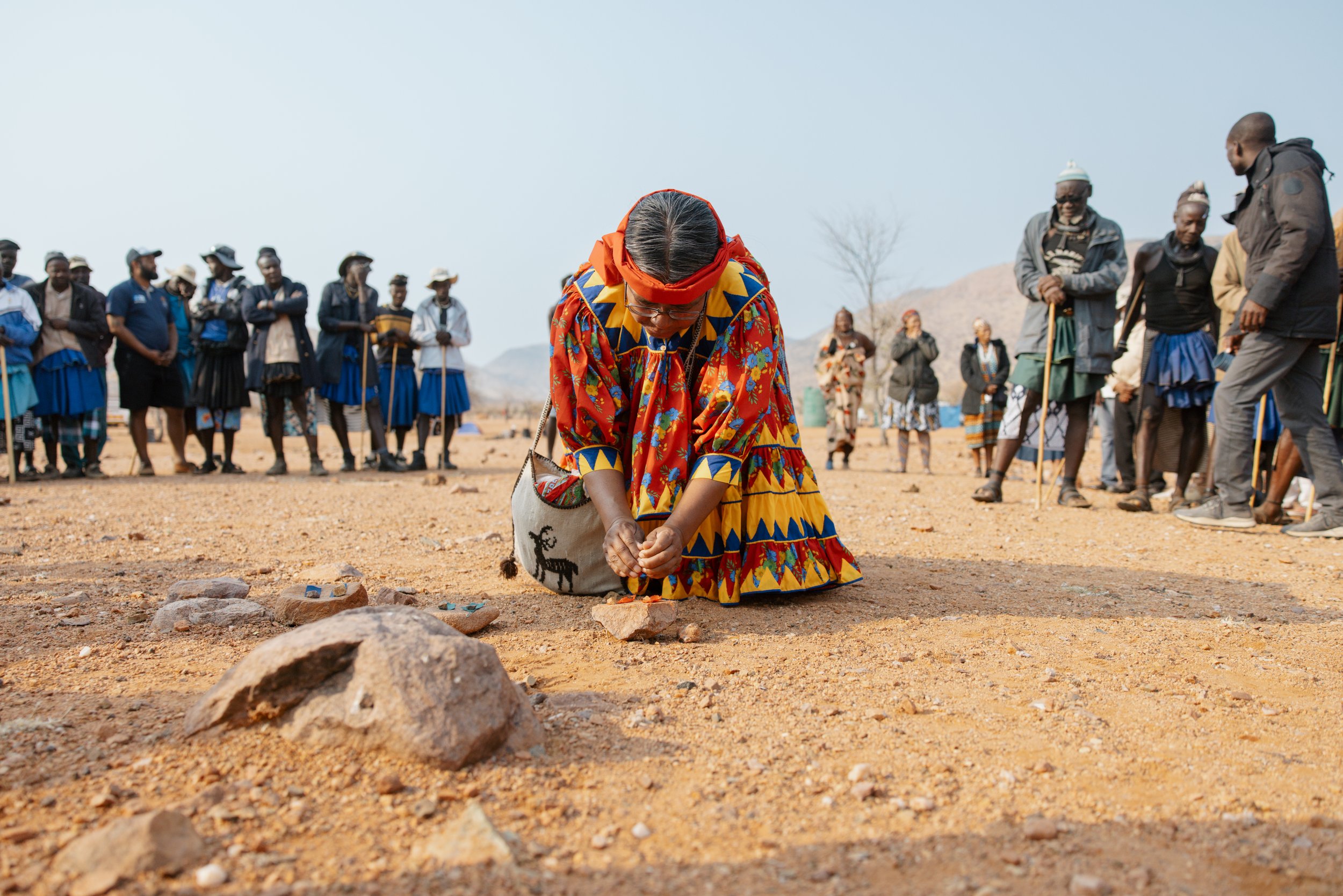
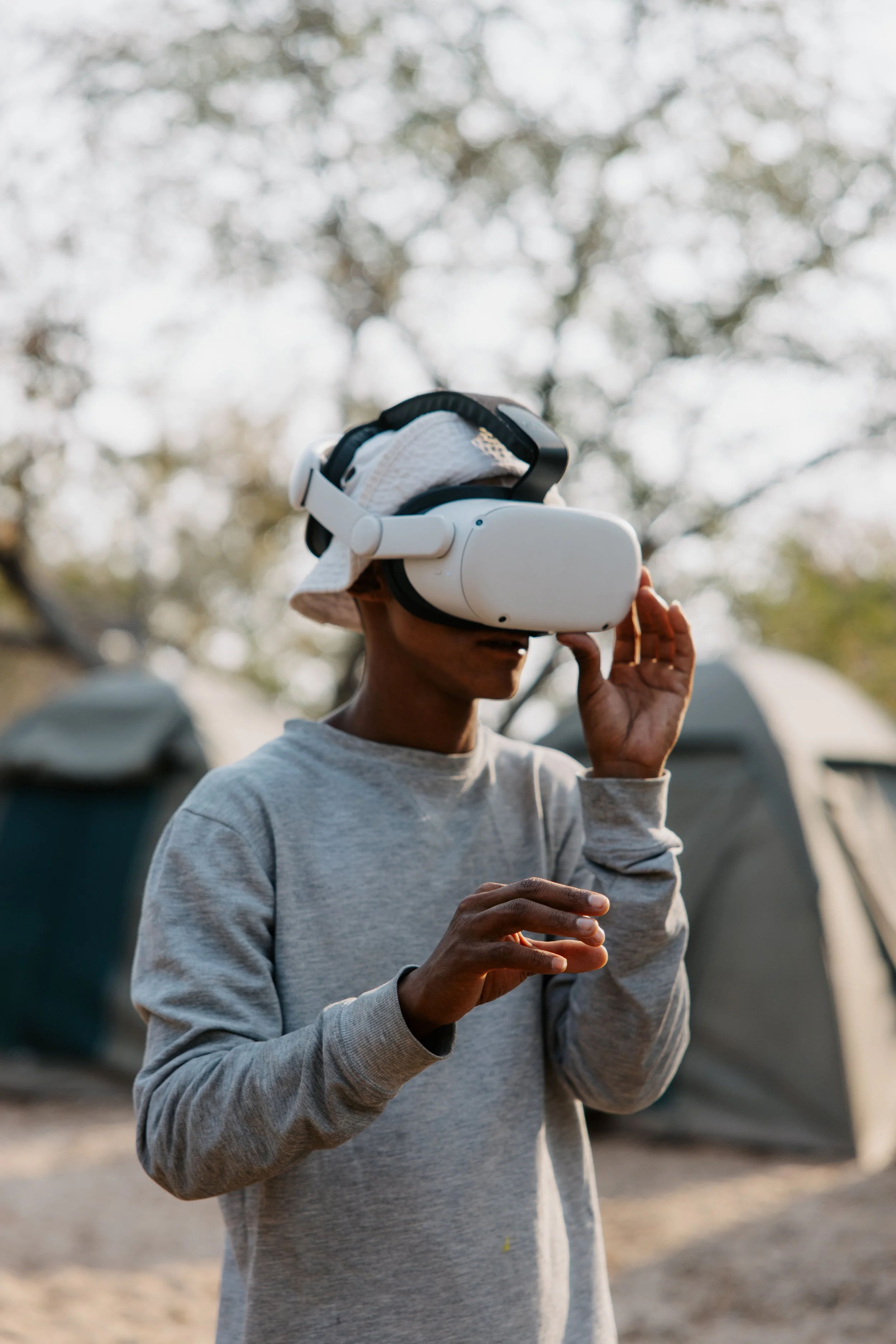
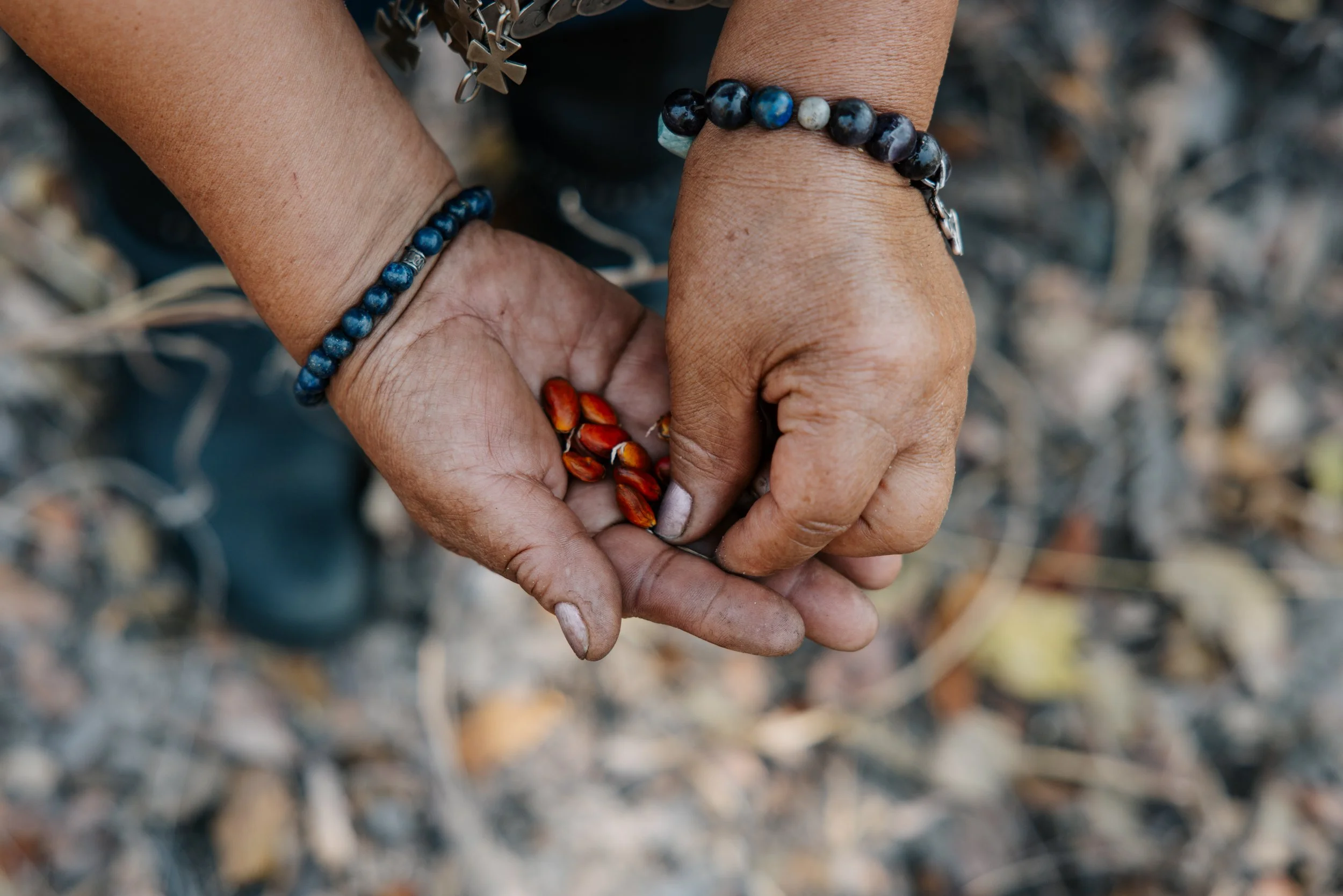
Along the way: tracking and gathering sessions led by Ju/'hoansi San elders; ethnobotanical walks in the Kunene landscape with OvaHimba knowledge holders; thematic Talking Circles on education, territories and governance, human rights, livelihoods, wellbeing, cultural identity, and technology; and ceremonies offered by different communities as gifts to the gathering.
Outcomes
01
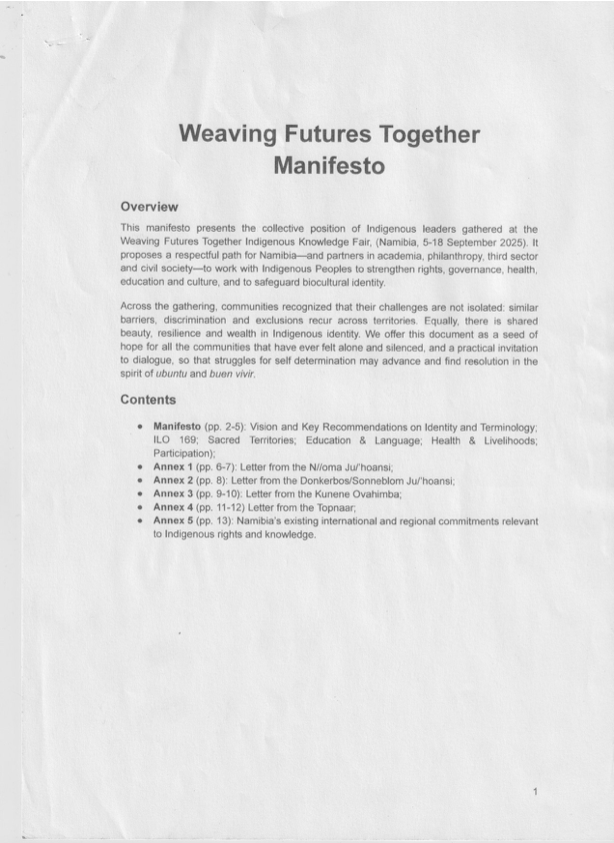
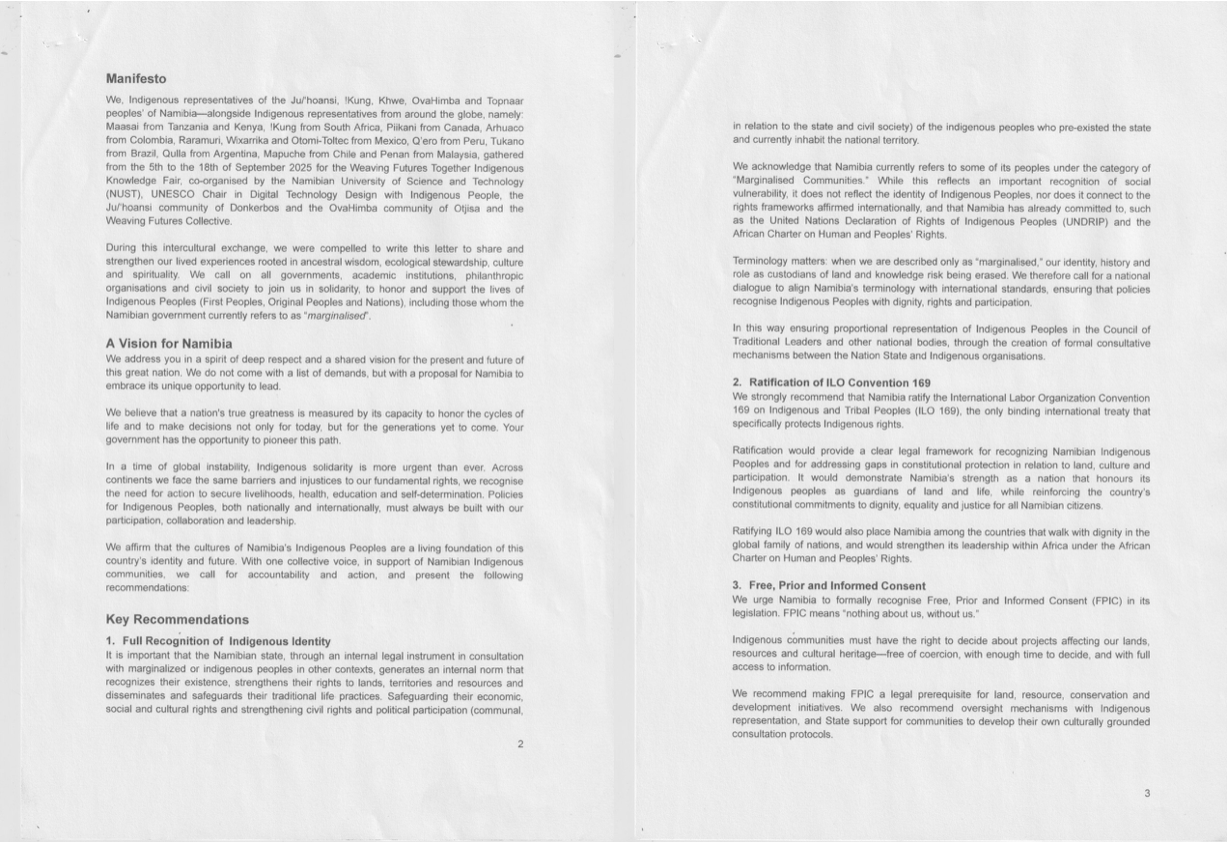
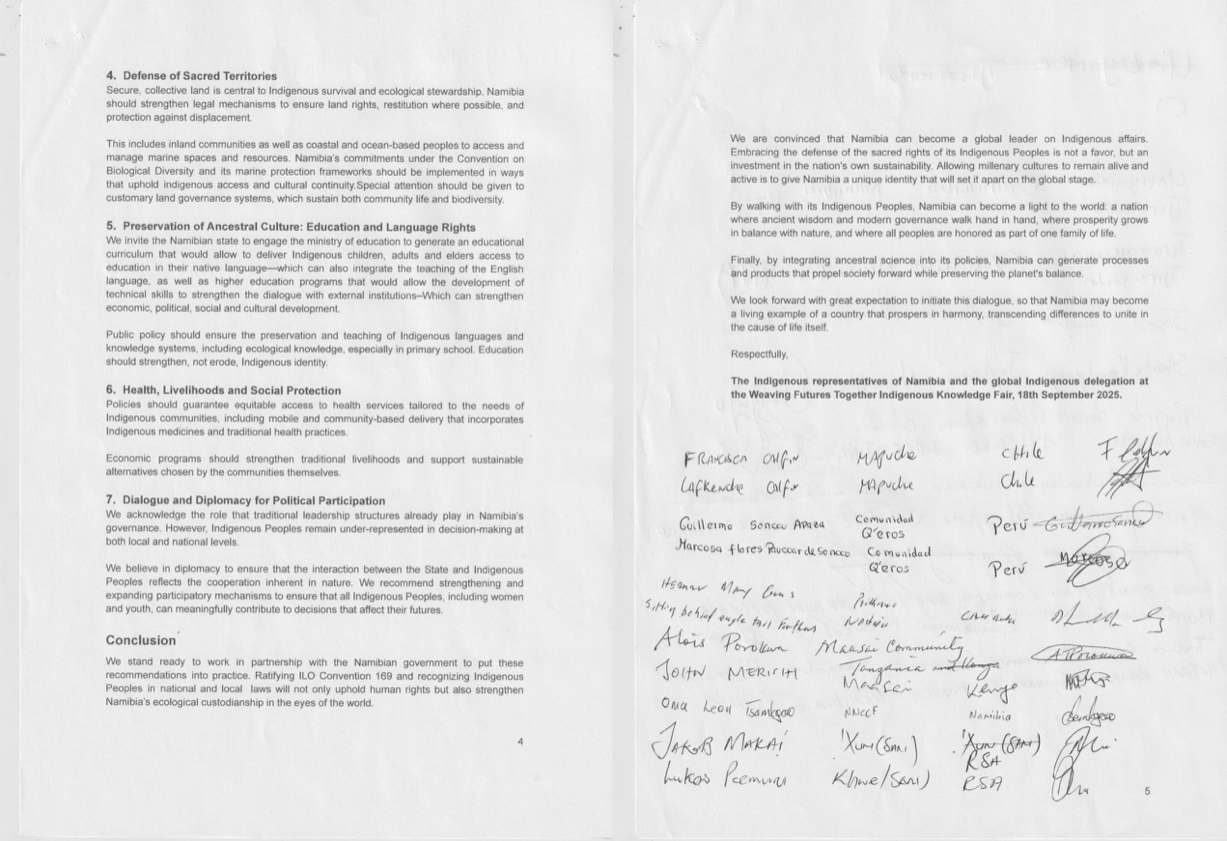
THE MANIFESTO
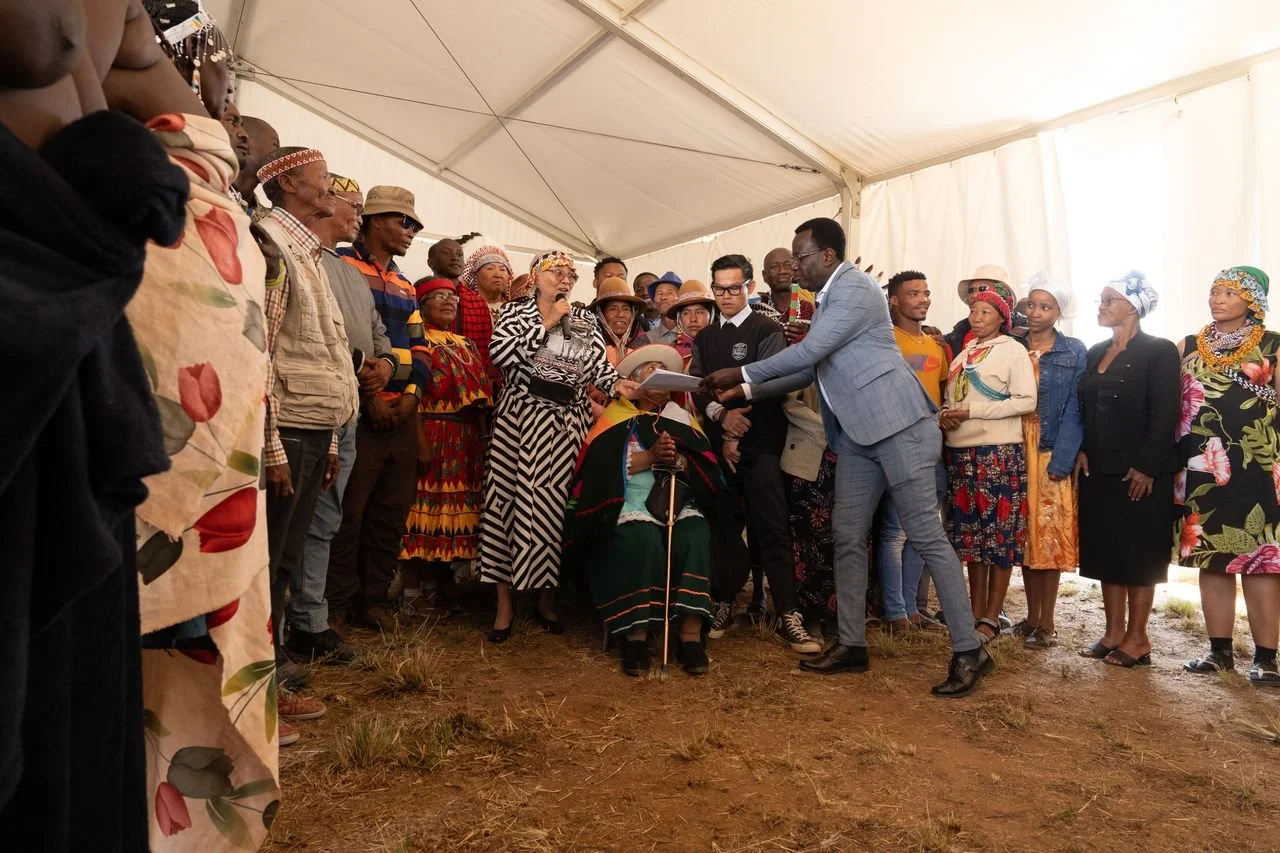
A collective statement of Indigenous rights, ecological principles, and policy demands — developed through the Talking Circle discussions and formally handed to Namibia's Vice President Lucia Witbooi at the closing Ecology Custodianship Day on 18 September 2025.
02
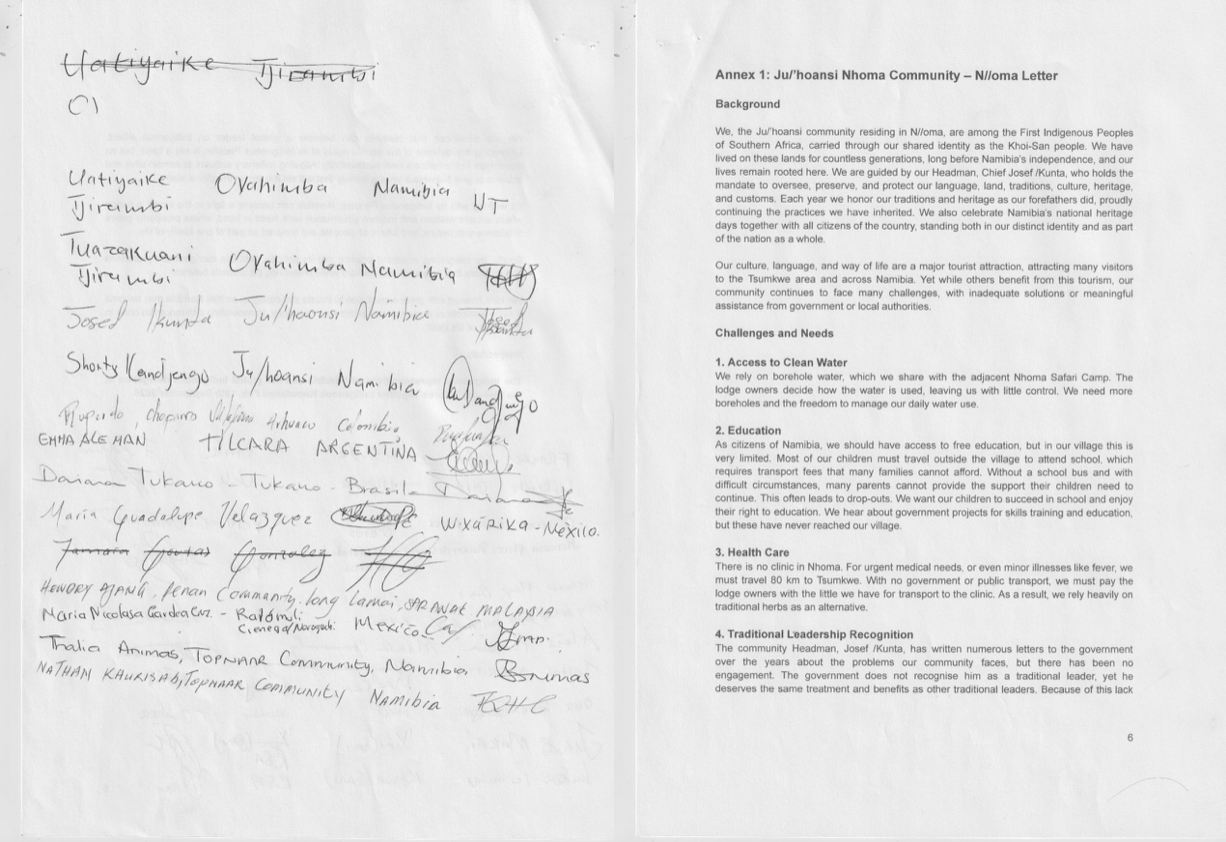
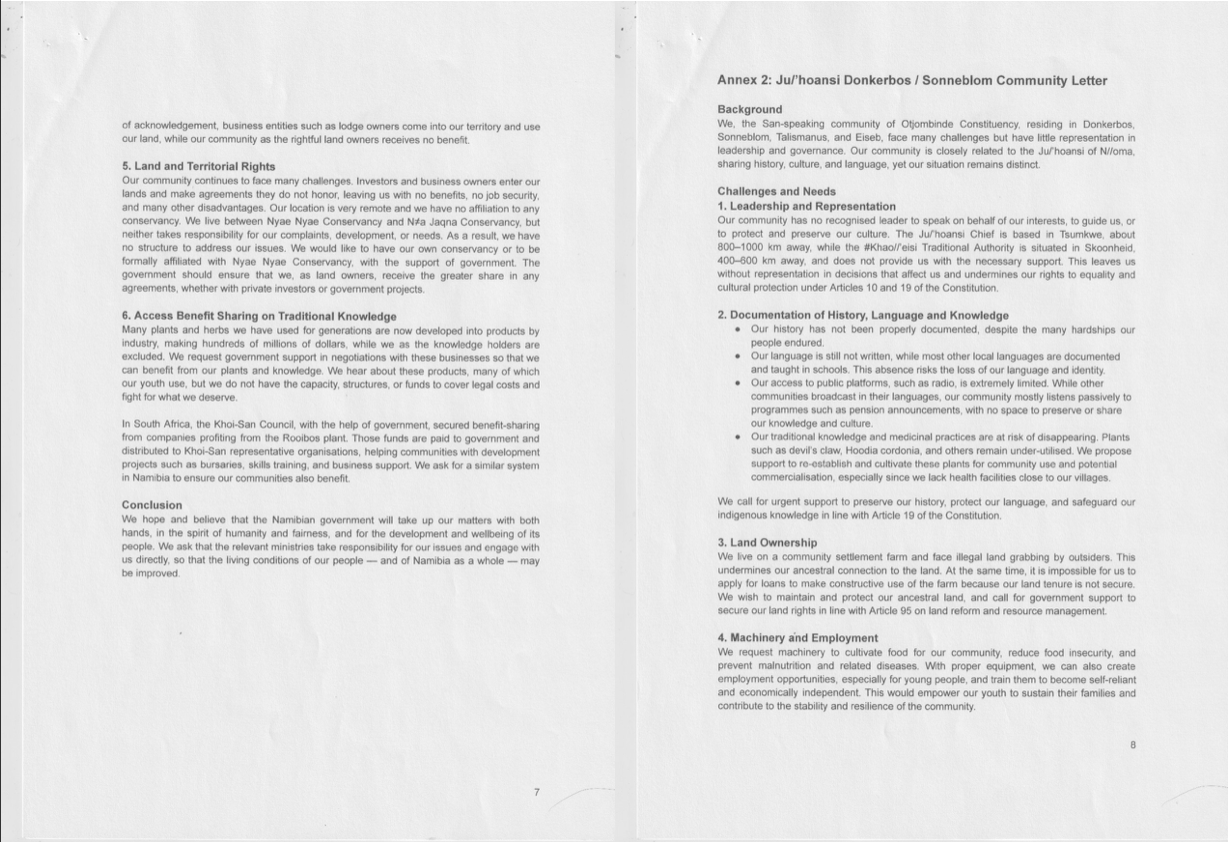
COMMUNITY LETTERS
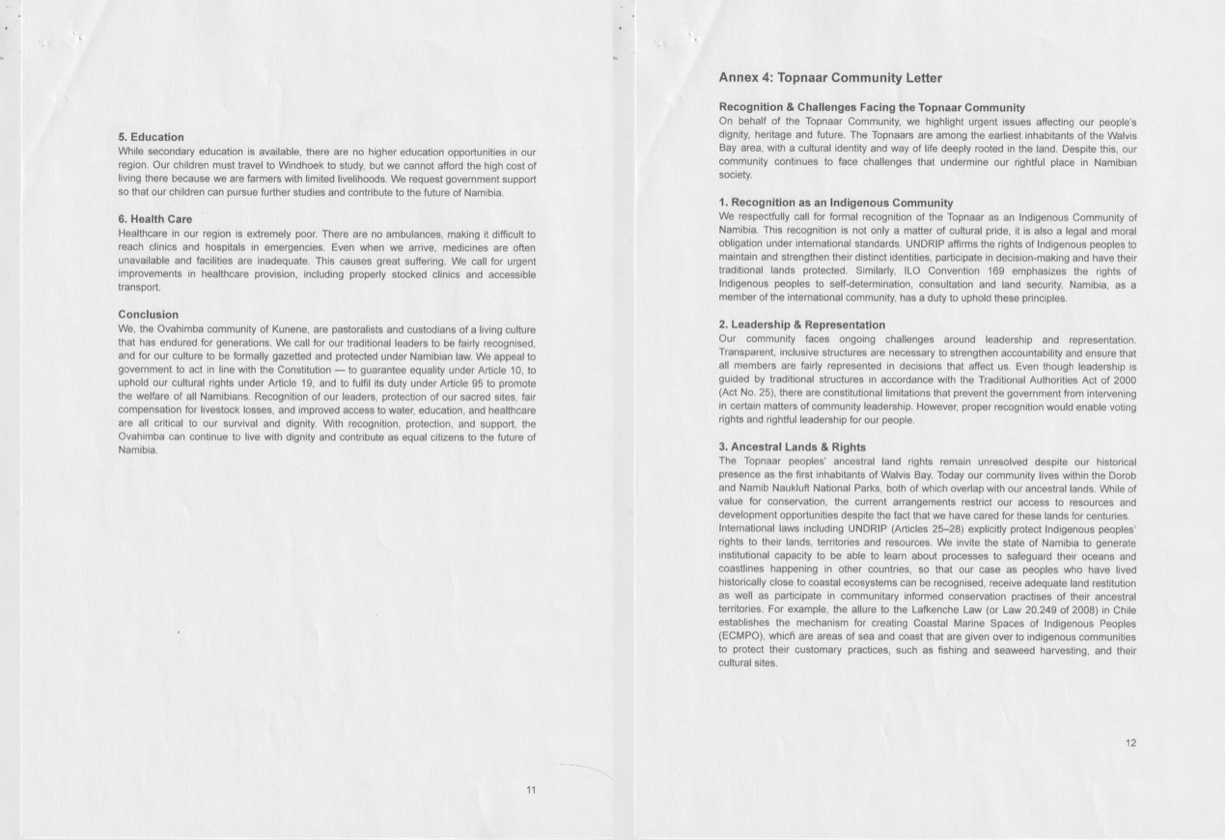
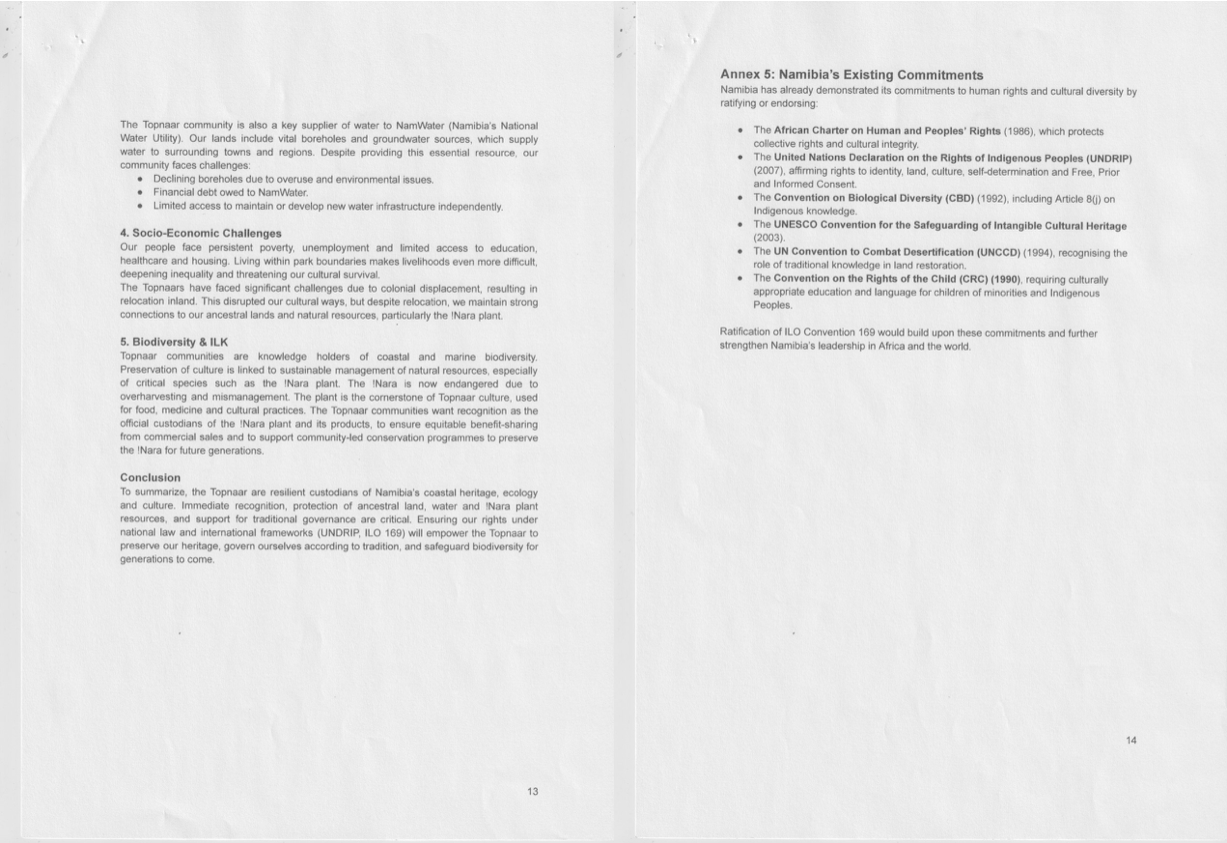
Letters from the Namibian host communities — the Ju/'hoansi San, OvaHimba, and Topnaar — to the Namibian government, handed over alongside the Manifesto.
03
A LIVING GLOBAL NETWORK
An active WhatsApp group connecting all 42 delegates across 12 countries — used for ongoing knowledge sharing, joint funding applications, and coordination toward a future gathering.
Partners and Supporters of the Weaving Futures Indigenous Knowledge Fair
Chantecaille Conservation Fund · Conservation and Community Foundation of Namibia · Gondwana Collection · Kanah · Medicine Festival CIC · MTC Namibia · N/a'an ku sê Foundation · Namibia Nature Foundation · Namibia National Commission for UNESCO · Namibia University of Science and Technology · Namibian Association of CBNRM Support Organisations · National Commission on Research Science and Technology · Palms For Life · Salt Essentials · UNDP Accelerator Lab · UNESCO · WWF Namibia · Anonymous Philanthropists and Sponsors